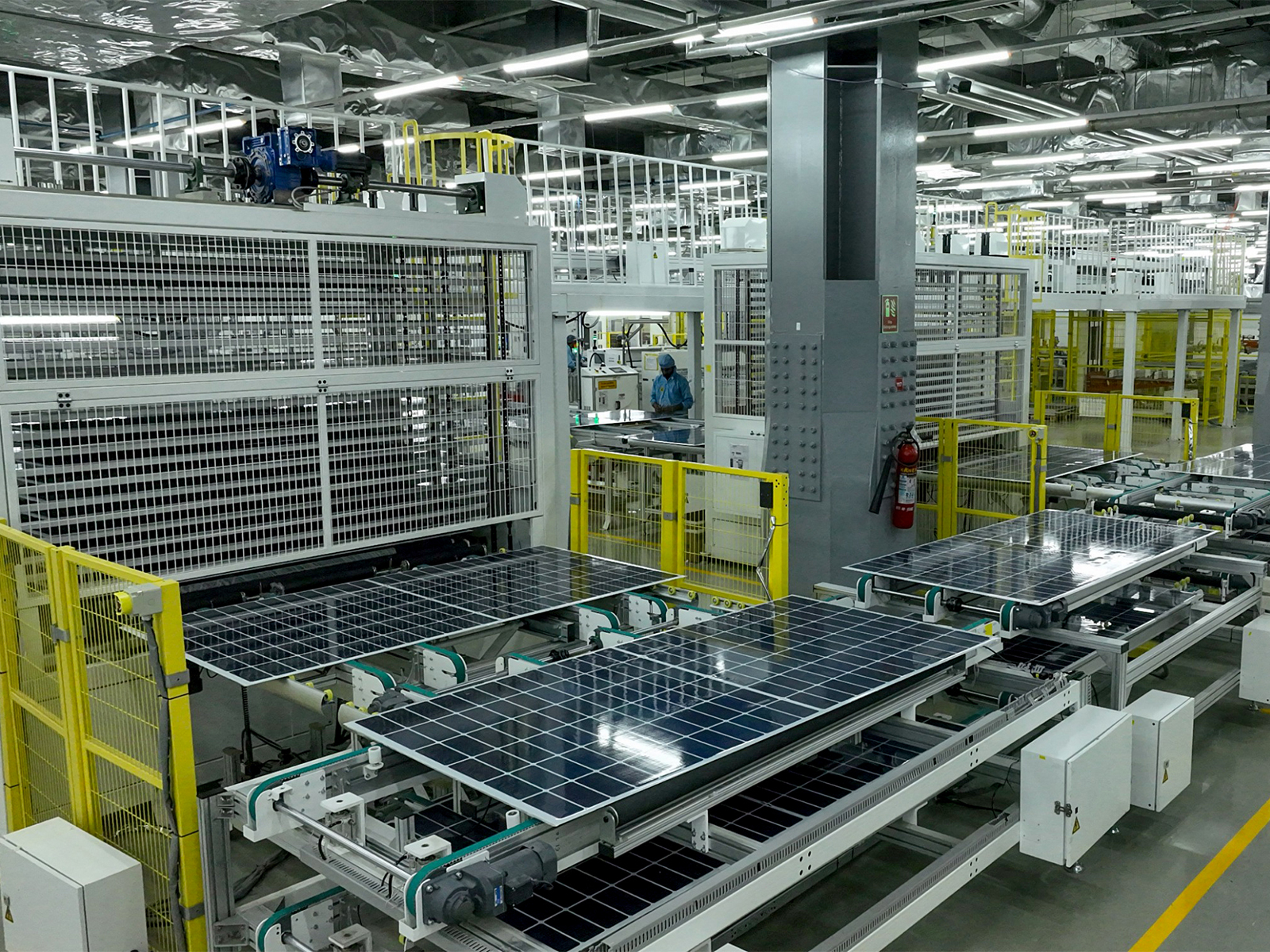
Beijing [China], December 16: Gradual automation is being implemented even in smaller factories in China, according to AFP on December 14. China is now the world's largest market for industrial robots, and the Chinese government is pouring billions of dollars into robotics and artificial intelligence (AI) to strengthen its presence in the sector.
The first virtually human-free factories have come online, even as widespread automation raises questions about job losses and the cost and difficulty of the transition for small and medium-sized enterprises. The solution lies in a hybrid approach, according to experts and factory owners.
At Neolix, a manufacturer of automated delivery vehicles in Jiangsu Province, China, manager Liu asserts that humans remain a crucial element even in technologically advanced manufacturing. "Automation... is primarily intended to assist humans and reduce labor intensity, not to replace them," Liu stated.
Meanwhile, mechanical engineering expert Nie Jun at Shanghai Jiao Tong University believes that China's strategy of focusing on industrial applications of AI means that full automation is feasible in many industries. Among them, tech giant Xiaomi is operating a "dark factory"-a place without humans, so no lights are needed-with robotic arms and sensors capable of producing smartphones without human intervention.
Mr. Nghe believes there is a " digital gap " between large companies with significant investment in modernization and smaller businesses struggling to keep up. "We will aim for more advanced technologies like automation to secure even larger orders," said Chu Diệp Phong, owner of Viễn Đong Precision Printing Company in Zhejiang Province, China. However, financial constraints are a major obstacle. "As a small company, we cannot afford certain fees," Mr. Chu shared. The company is trying to develop automated robotic quality control machines, but currently, human inspectors still check the final product.
On the other hand, Jacob Gunter from the Mercator Institute for China Studies (Germany) argues that the potential unemployment caused by widespread automation will be a challenge. "Companies will be happy to reduce their workforce... but the government won't like that and will be under a lot of pressure to address it," AFP quoted Gunter as saying.
Source: Thanh Nien Newspaper