VMPL
New Delhi [India], January 21: Consumer electronics will generate well over 1 trillion dollars in revenue in 2024, according to multiple market forecasts that peg the sector at roughly 1.2 trillion dollars and growing at mid-single-digit rates through 2030. Those figures usually conjure images of flagship smartphones and glossy launch events, but much of the cost in this market is incurred after purchase, in the quiet accounting of repairs, replacements, and downtime when devices fail.
For schools and organisations that now treat tablets and laptops as basic infrastructure, broken screens and damaged ports are not minor inconveniences but line items that compete with salaries, books, and services. In that environment, rugged cases and accessories have become a practical lever: spend upfront to reduce the frequency and severity of device breakage, or absorb higher, less predictable costs over the life of a fleet.
From Bondi Hack to Global Niche
STM Goods emerged from that cost equation before it had a name. In 1998, Sydney-based IT manager Ethan Nyholm slipped his new laptop into a padded postal envelope so he could carry it in a hiking pack, then realised there were few purpose-built options that combined genuine protection with a less corporate look. He teamed up with accessories buyer Adina Jacobs, and the pair launched what was then STM Bags, focused on laptop backpacks and sleeves designed to survive real use rather than just office commutes.
Over the next 26 years, the business, now branded STM Goods under the STM Brands umbrella, expanded into fitted tablet cases, laptop bags, phone accessories, and power products, including the acquisition of premium phone case label Element Case. It remains privately owned, bootstrapped, and comparatively small: third-party data puts STM's workforce in the dozens and its revenue in the low-single-digit millions, far below multinational competitors such as Belkin and Logitech.
Despite that scale gap, STM has built distribution in more than 30 countries, including the United States, Canada, Latin America, Australia and New Zealand, Europe, the United Kingdom, China, and broader Asia-Pacific markets. Its products are sold through a mix of retail partners, online channels, and institutional deployments, particularly in education.
Turning Breakage Into a Business Model
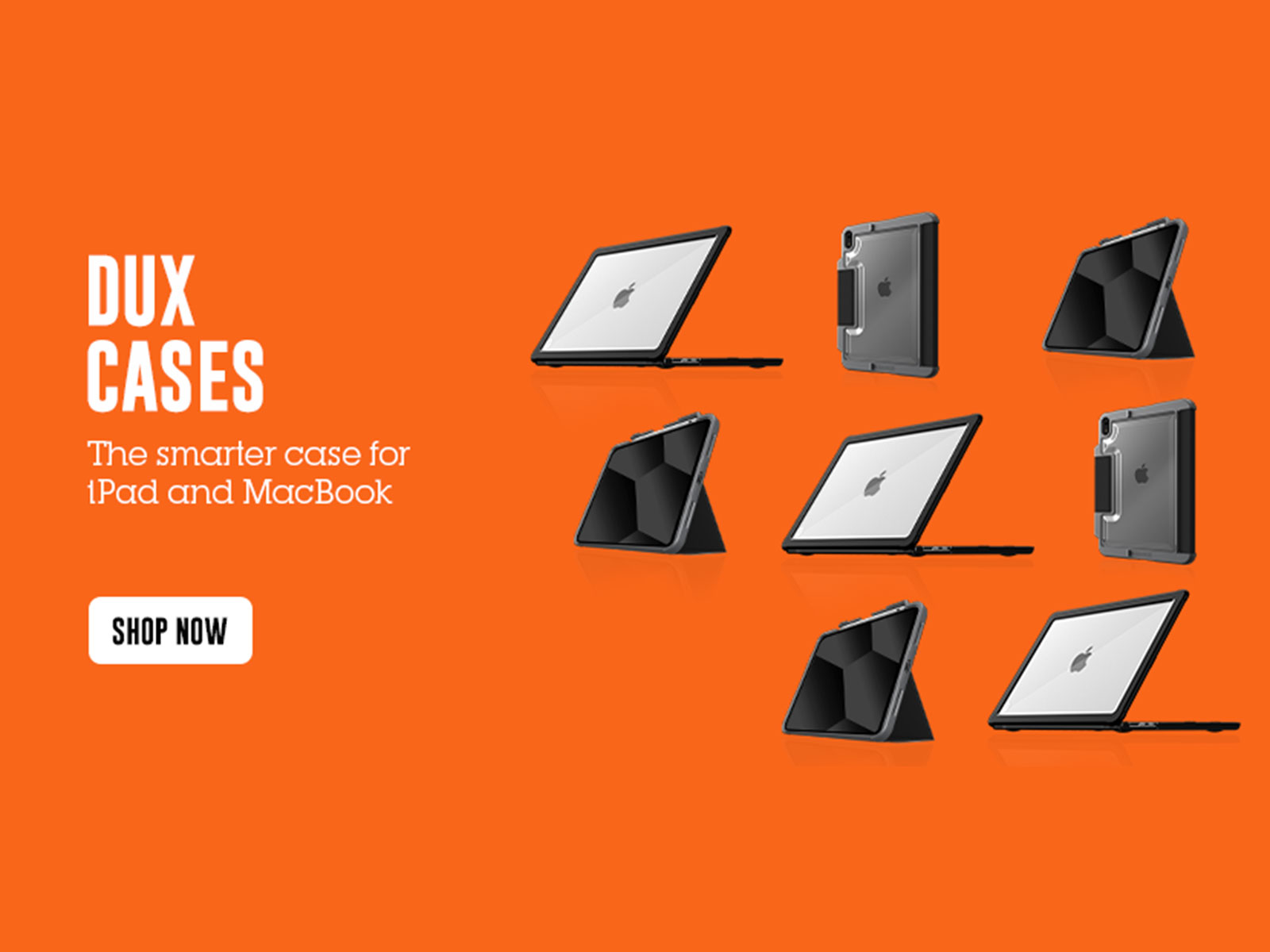
The core of STM's strategy is simple: reduce the financial and operational impact of device breakage. The company's Dux line of rugged iPad cases--led by the Dux Plus and Dux Ultra, along with the Dux USB-C keyboard and multi-device chargers such as ChargeTree--is designed around common failure points in classrooms and mobile workforces, such as corner impacts, screen cracks, and cable strain.
The company reports that it has deployed millions of Dux cases into education programmes globally, from primary schools to higher education. In those settings, a protective case can be the difference between a three-year device life and a series of repairs that erode already tight budgets. Global research on consumer electronics notes that institutional buyers increasingly treat devices as long-term infrastructure, making lifecycle costs--rather than just purchase price--a central consideration.
Nyholm has described STM's product decisions as a response to real failure data rather than hypothetical use cases. "We didn't guess our way into rugged cases; the devices broke and told us what to fix," he said in a recent profile discussing the company's work with classrooms and one-to-one deployments. That feedback loop between breakage reports and design updates has helped STM maintain a defined niche even as device manufacturers expand their own accessory offerings.
A Founder-Led Company in a Mature Market
As the broader consumer electronics sector matures, growth is expected to moderate in established markets, where smartphone and tablet penetration is already high, while segments such as education, enterprise mobility, and certain emerging regions continue to add devices. Analysts forecast global consumer electronics revenue climbing toward 1.7 to 1.8 trillion dollars by 2030, but with a stronger emphasis on replacement cycles, durability, and total cost of ownership than in earlier boom years.
STM's founder-led status shapes how it operates in this environment. The company is debt-free and has not taken venture capital, giving it latitude to prioritise long product cycles and institutional relationships over short-term sales spikes. Co-founder and director of product Jacobs, who previously worked as an accessories buyer in Australian fashion and swimwear, describes the company's work in practical terms: "We design products so people can interact with technology more easily and with greater peace of mind," she has said.
Global market numbers rarely single out accessories firms of STM's size. Yet as schools, districts, and workplaces calculate the trade-off between upfront case costs and the very real expense of broken devices, companies that specialise in rugged, intuitive protection occupy a distinct economic role. STM Goods, built from a padded envelope and a series of cracked screens, has made that trade-off its primary business.
(ADVERTORIAL DISCLAIMER: The above press release has been provided by VMPL. ANI will not be responsible in any way for the content of the same.)